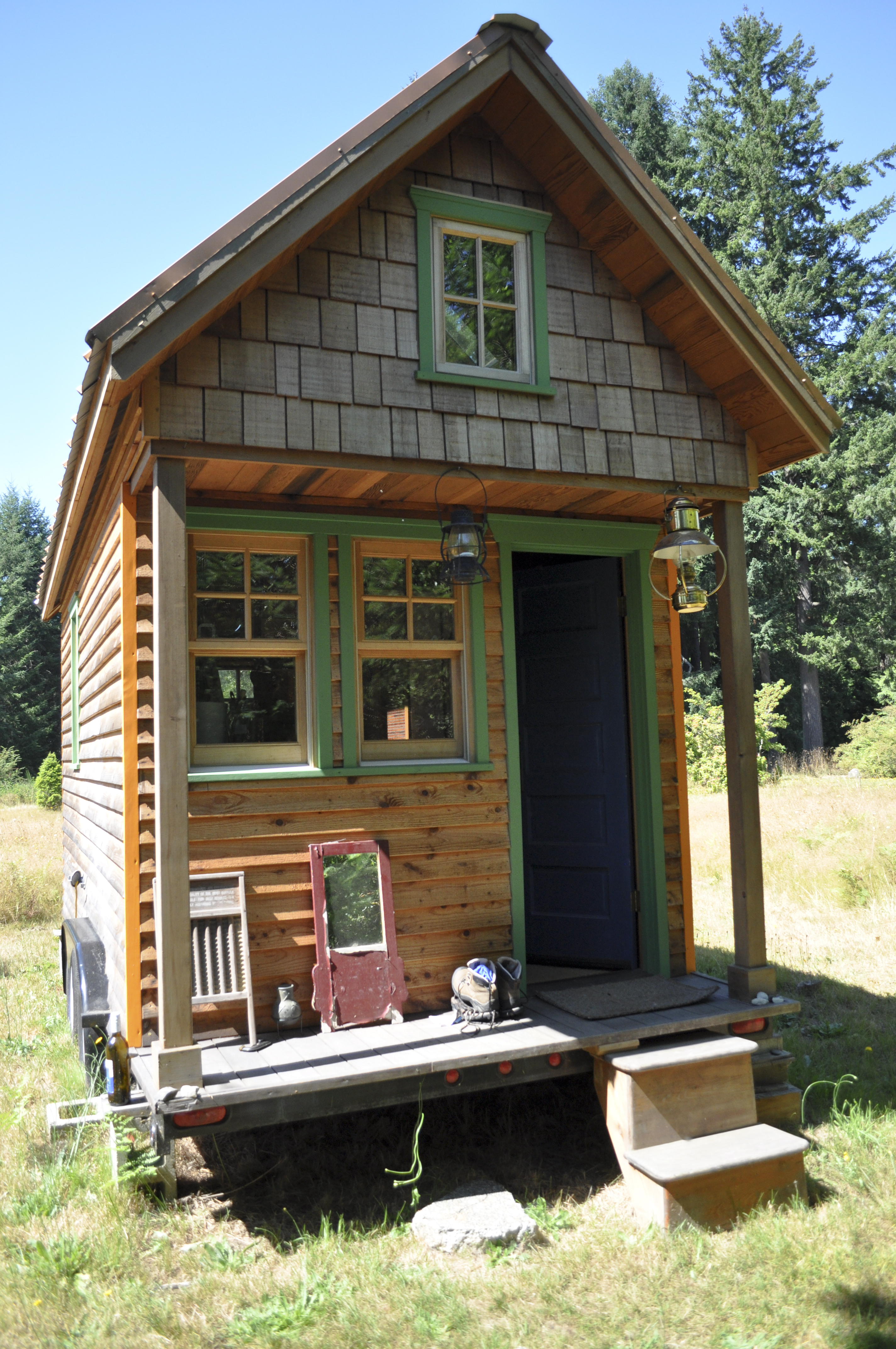
Building a tiny house in Canada involves more planning steps than comparable projects in the United States, largely because Canadian building codes are provincially administered and municipal zoning bylaws vary considerably even within the same province. Understanding which rules apply before a design is finalized saves both time and money.
Defining the dwelling type first
The first planning decision is whether the tiny house will be on wheels (THOW — tiny house on wheels) or on a fixed foundation. This distinction matters throughout the entire regulatory process.
A THOW is typically classified as a recreational vehicle in most Canadian provinces, which means it falls under provincial motor vehicle regulations rather than building codes. This avoids some permit requirements but also limits where it can be legally occupied year-round. Many municipalities prohibit full-time habitation of RVs on residentially zoned lots.
A tiny house on a permanent foundation is classified as a residential dwelling and must comply with the applicable provincial building code — usually Part 9 of the National Building Code of Canada (NBC), which covers houses and small buildings. Some provinces have adopted the NBC directly; others maintain their own codes with modifications.
Key reference: The National Building Code of Canada 2020 (NBC 2020) is published by the National Research Council of Canada. Provincial adoptions vary: British Columbia uses the BC Building Code, Alberta uses the Alberta Building Code, and Ontario uses the Ontario Building Code — each with its own effective date and amendments.
Site selection considerations
A suitable site must satisfy multiple requirements simultaneously: zoning classification, minimum lot size, servicing requirements (water and sewer), and access. In rural settings, access road standards set by the regional district also apply.
Zoning classification
Residential zoning in Canadian municipalities typically falls into categories such as R1 (single detached), R2 (semi-detached and small multifamily), and various rural residential designations. Tiny houses on fixed foundations are most easily permitted in residential zones. Agricultural and resource zones often require a rezoning application or a variance to permit a dwelling, which adds months to the process and is not guaranteed.
Minimum lot size and setbacks
Municipal bylaws specify minimum lot areas for residential development — these vary from roughly 300 m² in urban infill zones to several hectares for rural residential parcels. Setbacks from property lines (typically 1.2 m to 6 m depending on zone) further constrain where on the lot a structure can be placed.
Servicing
Urban and suburban lots usually have access to municipal water and sewer. Rural sites typically require a drilled well (subject to provincial water well regulations) and a septic system approved by the regional health authority. Well water testing is required before occupancy in most provinces.
Foundation options
For a permanently sited tiny house, four foundation types are commonly used in Canada, each suited to different site conditions and budgets.
| Foundation type | Typical use | Key consideration |
|---|---|---|
| Concrete slab-on-grade | Level sites, mild climates | Requires insulated edge in cold climates (NBC Part 9) |
| Frost wall / full basement | Colder provinces, sloped sites | Provides below-grade storage; higher cost |
| Helical piers | Rocky terrain, unstable soils | Minimal excavation; requires engineering review |
| Post-and-pier | Sloped or flood-risk sites | Must meet local flood elevation requirements |
In provinces with significant frost depth (Manitoba, Saskatchewan, northern Ontario), frost wall foundations extending to the local frost line depth are the most common choice for year-round dwellings.
Building code requirements for small dwellings
Part 9 of the NBC applies to buildings of three storeys or less with a floor area of 600 m² or less — which covers essentially all tiny houses. Key requirements include:
- Minimum room dimensions: The NBC does not specify a minimum overall dwelling size, but rooms must meet minimums. A bedroom must be at least 7.0 m² with no dimension less than 2.0 m. Living rooms have similar dimensional minimums.
- Ceiling height: A minimum of 2.3 m in habitable rooms, with some allowance for sloped ceilings in loft spaces.
- Thermal envelope: Insulation requirements in the NBC are expressed as effective thermal resistance (RSI or R-value) and vary by climate zone. In most of Canada, walls require RSI 3.85 to RSI 5.0+ depending on location.
- Egress: Sleeping areas must have at least one egress window meeting minimum dimensions (roughly 0.35 m² opening area, 380 mm minimum height and width).
- Mechanical ventilation: NBC 9.32 requires controlled ventilation in houses to maintain indoor air quality given modern airtight envelopes.
The permit application process
Permit requirements vary by municipality, but a typical residential building permit application for a new tiny house on a permanent foundation involves the following steps.
Step 1: Pre-application consultation
Most municipal building departments offer or require a pre-application meeting before formal submission. This meeting confirms whether the proposed use is permitted under current zoning, identifies any variances needed, and clarifies what drawings and documents will be required.
Step 2: Drawing package preparation
A building permit application typically requires site plan, floor plans, elevations, foundation plan, and framing details. For houses under approximately 150 m², some municipalities accept designer drawings (produced by a certified building designer) in lieu of engineer-stamped drawings, though this varies. In British Columbia, a registered building designer or architect must sign drawings for new residential construction.
Step 3: Submission and review
Review timelines vary from two weeks in smaller municipalities to several months in high-volume urban building departments. Applications that are complete on first submission typically move faster through the queue.
Step 4: Inspections
Inspections are required at defined construction stages: foundation (before backfill), framing (before insulation and cladding), rough-in plumbing and electrical, insulation (before drywall), and final occupancy. Missing an inspection stage requires opening completed work for the inspector's review, which adds cost.
Provincial variation: British Columbia uses the BC Energy Step Code alongside the BC Building Code, which sets staged energy performance targets above the NBC baseline. New houses built from late 2023 must meet Step 3 energy performance requirements in most municipalities, with higher steps applicable in some jurisdictions.
Timeline expectations
From site selection to occupancy permit, a straightforward tiny house project on a serviced urban or suburban lot in Canada typically takes between 12 and 24 months. The main variables are permit review time, contractor availability, and whether any rezoning or variance applications are needed. Rural projects requiring septic system approval and well installation add several months.

